
OPENLAND FIELD NOTE
Desert Heat Planning: Build the Day Before Choosing the Trail
An evidence-led field note for Southwest travelers, designed to produce a heat-aware day with water, shade, turnaround and recovery logic.
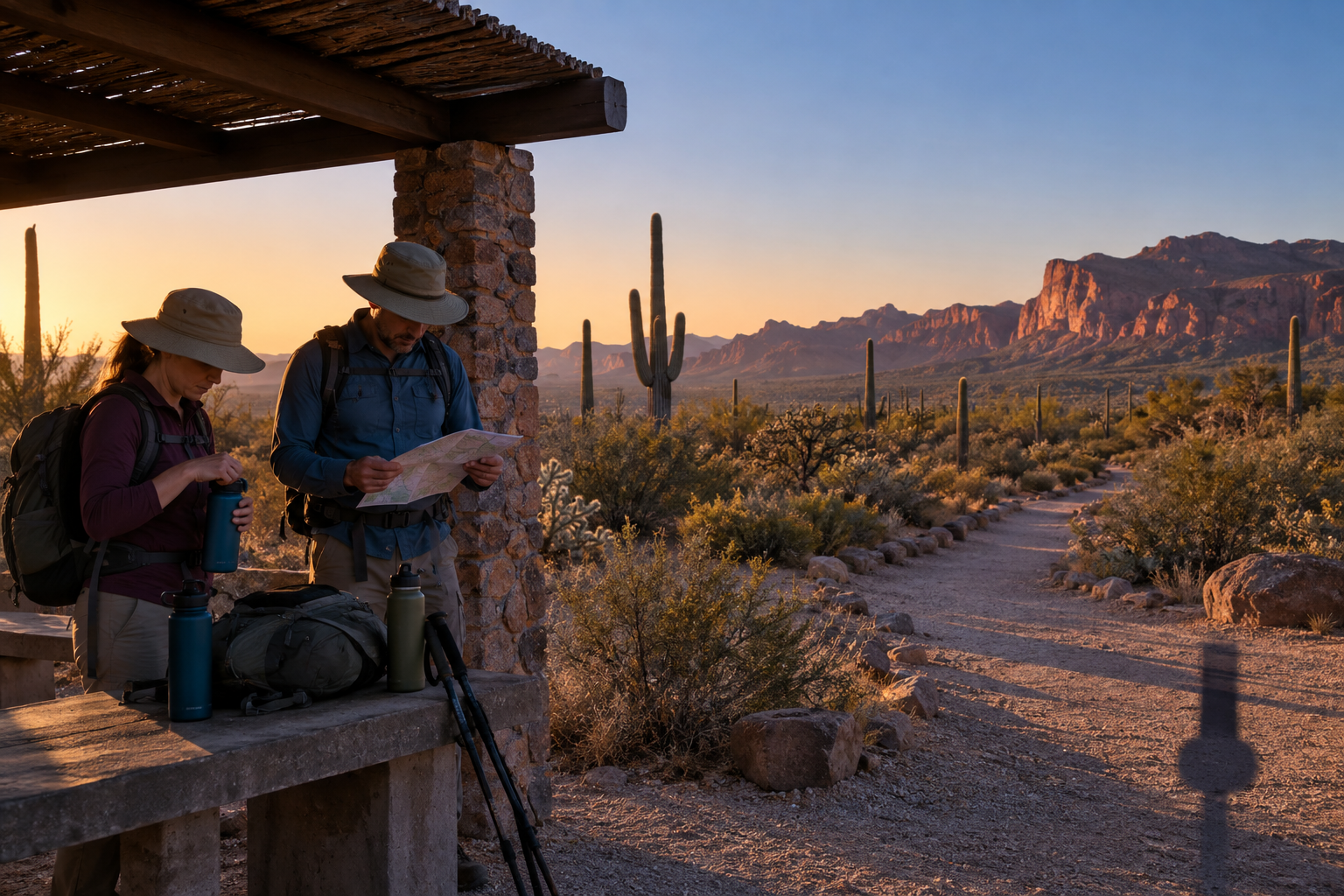
Start Desert Heat Planning: Build the Day Before Choosing the Trail with the real trip question
A useful desert heat hiking plan process begins with the people, dates and reason for going, not a list of famous stops. This page is for Southwest travelers. Its working subject is desert heat planning: build the day before choosing the trail, and the intended result is a heat-aware day with water, shade, turnaround and recovery logic. Openland provides independent itinerary research and route design; it does not sell lodging, transport, park admission, permits or guided activities. Availability and conditions remain controlled by third parties. That boundary keeps the route logic visible. Before drawing a line, describe what the travelers want to feel, what would make the trip unworkable, the longest acceptable drive, likely walking range and the one landscape experience worth protecting when weather or access changes.
Choose a route shape before collecting stops
The working shape is gateway -> landscape base -> day windows -> protected return. Test it as a sequence of arrival, repeated day trips, hotel changes and departure rather than as pins on a map. A close-looking pair of parks can require a slow mountain road, a ferry, a seasonal pass or a long return to the only practical gateway. Calculate road time from the actual lodging area, add fuel, food and orientation, and notice which road is driven twice. A base earns its place when it supports several meaningful days with different weather exposure. A stop should be removed when its scenic value is smaller than the packing, checkout and recovery cost it creates. The goal is not maximum coverage; it is a route whose geography still makes sense at human speed.
Design with a seasonal window, not a generic best month
In the United States, season changes more than temperature. Roads, shuttles, water sources, ferries, visitor services, daylight, insects, smoke and permit rules may move on different calendars. A monthly climate average cannot verify conditions for a particular date or elevation. Build a seasonal hypothesis, then attach every route-shaping claim to the agency or provider responsible for it. Record the observation date and a future recheck point. If an experience depends on snowmelt, foliage, wildlife movement or a road opening, label that dependency rather than presenting it as guaranteed. A strong route also contains a lower-exposure or lower-elevation alternative that preserves the purpose of the day. This turns changing conditions into a decision process instead of a last-minute surprise.
Give each nature day one anchor and one graceful exit
The stated pace is desert heat planning: build the day before choosing the trail. Translate that phrase into a day with an arrival window, one primary experience, food and restroom opportunities, a turnaround point and a simple way to stop early. Sunrise, wildlife and desert objectives can require early hours; night-sky plans can require late ones. They should not be stacked automatically. Protect sleep and driving attention across the whole route. Place exposed or high-elevation activity in the most conservative weather window supported by current official guidance, then keep a nearby optional branch for good conditions. The exit matters as much as the objective: identify where the traveler returns, when transport ends, and which instruction takes priority if a ranger, road authority or weather service changes the plan.
Describe the exact requirement across the whole path
Terms such as easy, family-friendly and accessible are discovery labels, not complete evidence. For this route, turn a traveler need into observable questions about parking, surface, grade, width, steps, seating, shade, restroom design, mobility-device rules, shuttle boarding and distance from the final stop. One accessible overlook does not verify the approach road, vehicle, lodging room or next attraction. Assign each question to the land manager or provider able to answer it, keep the reply with a date, and prepare a comparable alternative. Openland can organize this verification but cannot certify a facility or replace medical advice. Exact questions reduce assumptions for wheelchair users, older travelers, families, people managing fatigue and anyone whose enjoyment depends on predictable transitions.
Put permits and reservations in consequence order
Route pressure includes changing access, weather, permits and traveler-specific limits. Identify which scarce decision would force the itinerary to change if unavailable: a timed entrance, vehicle reservation, trail permit, ferry, shuttle, campsite or particular room location. Research that item before flexible details. Use the official system for the exact unit, date, party and activity; a general park pass may not include a separate reservation. Record release times, time zone, fees, refund rules and the name on the booking. Never automate a competitive booking or imply that research holds inventory. If the scarce item fails, activate the already chosen route variant rather than forcing the remaining days around a poor substitute. The permit planning guide explains this hierarchy in detail.
Separate official fact, observation, judgment and unknown
The evidence standard for this work is official land-manager, weather, road, permit and provider sources with observation dates. Operational and safety claims should lead to the responsible land manager, road authority, weather agency, transportation provider or property. Independent maps, forums and reviews can reveal useful questions but do not become final authority for changing rules. Save what a source supports, the date viewed and the exact decision it informed. When sources conflict, contact the responsible organization or redesign around the uncertainty. Keep planning judgment separate: explaining why one base reduces fatigue is different from claiming a road is open. Unknowns remain visible with an owner and recheck date. Read the Openland research standard for the complete source hierarchy and correction method.
Build one credible fallback and name its trigger
A resilient nature trip does not need three complete itineraries. For the most exposed or scarce day, choose one alternative that is geographically plausible and preserves the day purpose. Write the trigger in advance: an official closure, smoke threshold from the traveler, severe-weather advisory, unavailable reservation, fatigue boundary or road instruction. The alternative should not rely on the same vulnerable road, elevation or permit. Flexible lodging and transport terms can create room to pivot, but travelers must read the live contract before payment. During the trip, official emergency, ranger and road instructions override every static route file. Openland does not provide real-time monitoring, rescue, medical advice or a safety guarantee. It provides a legible decision structure and a closure planning method.
Price the route as a set of decisions
For a commissioned route, planning starts at scope first; every travel purchase remains separate and is made directly by the traveler. Divide the trip estimate into transport, lodging with taxes, park or activity charges, local movement, meals, equipment, insurance and contingency. Then connect cost to route value. A lower room rate can become expensive after repeated long drives. A gateway night can protect a flight. A refundable booking can preserve a seasonal alternative. Research-time prices are dated context rather than quotations, and no total is final until the traveler checks the live provider page. The fees and scope page shows what changes the planning fee, what is delivered and what remains outside the service.
Turn research into a route the whole party can use
Finish with a compact record for Desert Heat Planning: Build the Day Before Choosing the Trail: route sequence, base logic, day windows, driving assumptions, permits, exact access questions, booking order, primary official links, fallback trigger and recheck dates. Download essential confirmations and official instructions for low-signal areas, but continue following live signs and staff direction. Share the plan with the traveling party and leave an appropriate trip record with a trusted contact when activities warrant it. Remove sensitive documents, payment details and unnecessary medical information. The best deliverable does not claim certainty; it makes assumptions visible enough to challenge and next actions clear enough to complete. Compare all nature route planning services, read the field notes, or start a privacy-limited route brief.
Open the current official page for the exact date, place, party and activity.
Openland supplies itinerary research and route judgment. We do not control park operations, roads, weather, wildlife, facilities, permits, transport or third-party fulfillment. Live instructions always take priority.
Read the complete verification standard →